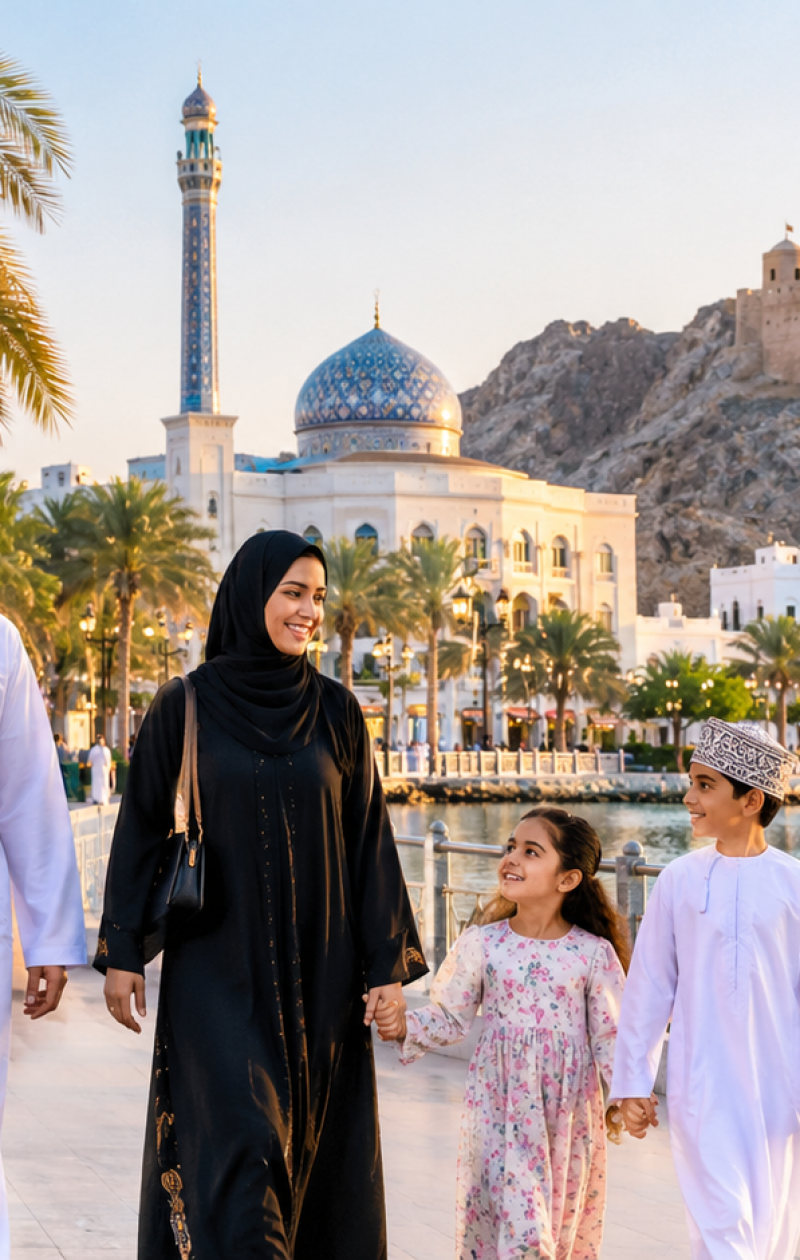
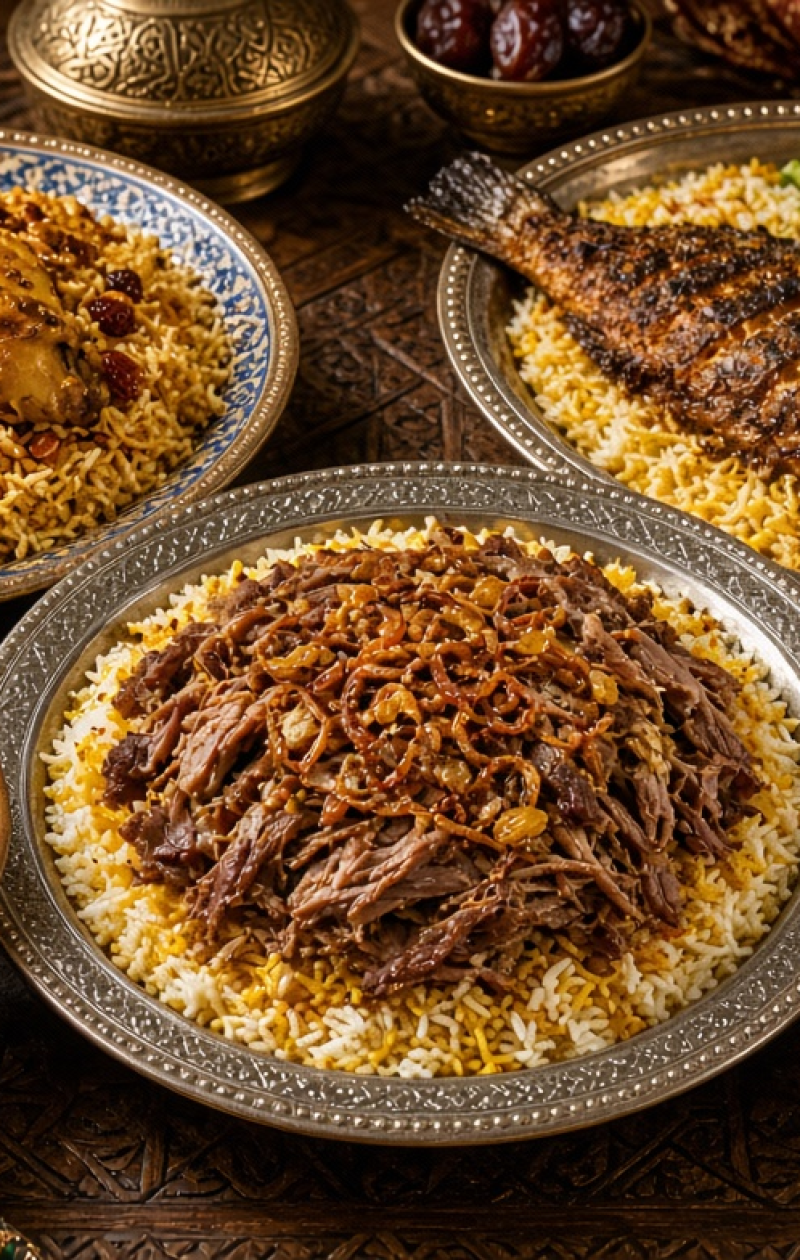
Understanding Omani customs and traditions is essential for tourists, expatriates, and business professionals. Omani culture is rooted in mutual respect, hospitality, and a strong commitment to traditional values. Understanding these values and observing social etiquette can help foster more effective communication with local people and enable a more informed and respectful presence in Omani society. In this article, you will discover the most important Omani customs and traditions, along with essential cultural tips for living, visiting, or doing business in the country.
Greetings in Oman; The First Step of Communication
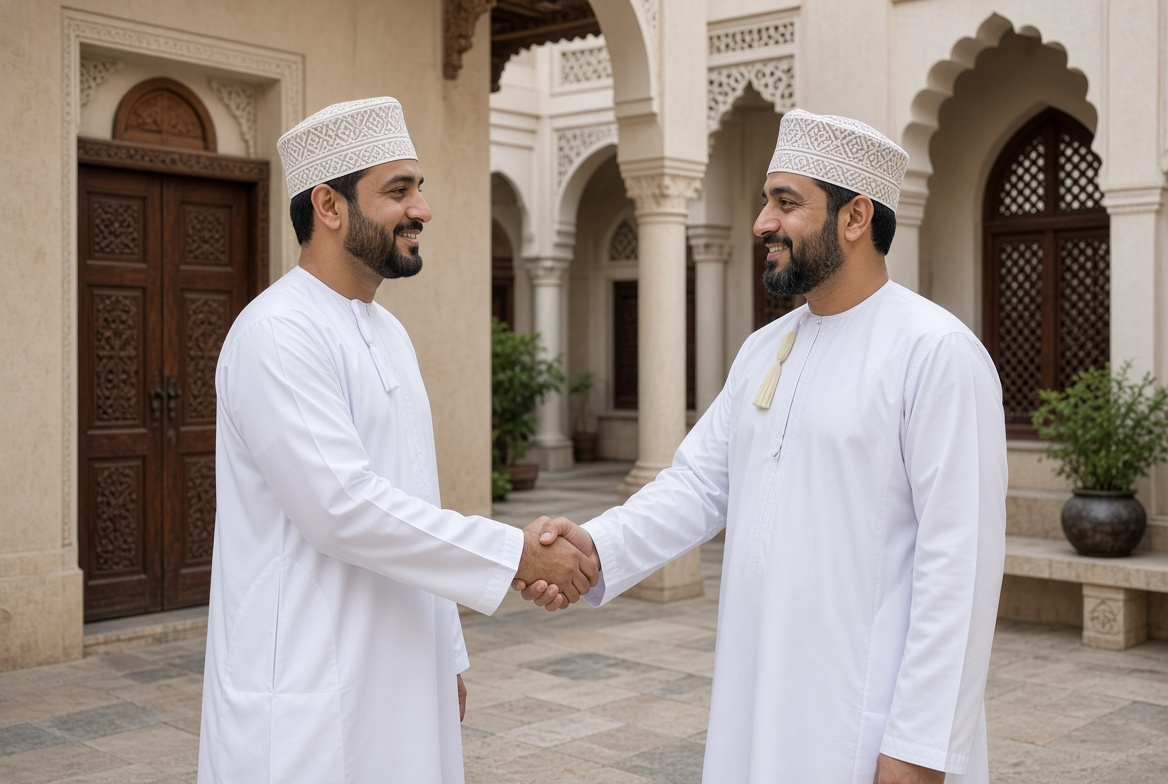
Greeting is one of the first situations in which a foreigner encounters Omani social culture. Greeting with respect and an appropriate tone is important. The phrase “salamu Alaikum” is common in social settings, and the usual response is “Wa Alaikum Assalam.” Even if you do not speak Arabic, this single sentence can open a door to communication. In work and formal environments as well, it is better to begin the conversation with respect and without haste. In many situations, a few short sentences of greeting and acquaintance before getting to the main subject are natural.
Handshaking; A Point You Should Know
Regarding handshaking, it is better to pay attention to the circumstances and the other person’s behavior. Especially in interactions between men and women, one should not assume that shaking hands is obligatory in every situation. If the other person does not initiate a handshake, respecting that choice is more appropriate. One of my Omani colleagues explained this as follows: “We do not shake hands because it is not disrespectful; sometimes respect lies in distance.”
In dealing with elderly people or those of formal status, attention to the form of address and a respectful tone becomes even more important. Using titles such as “Sheikh” or “Ustadh” for elderly or high-status individuals is a sign of respect.
Hospitality and Reception; The Ritual of Coffee and Dates
Hospitality is one of the well-known aspects of Omani culture and is seen in many family and social situations. Omani coffee, dates, and halwa are among the recognized elements of traditional hospitality. During hospitality, accepting a drink or food with respect can be a sign of appreciation for the host. Even if you do not feel like eating, a symbolic acceptance (for example, one date) can warm the relationship.
The Coffee Cup Custom
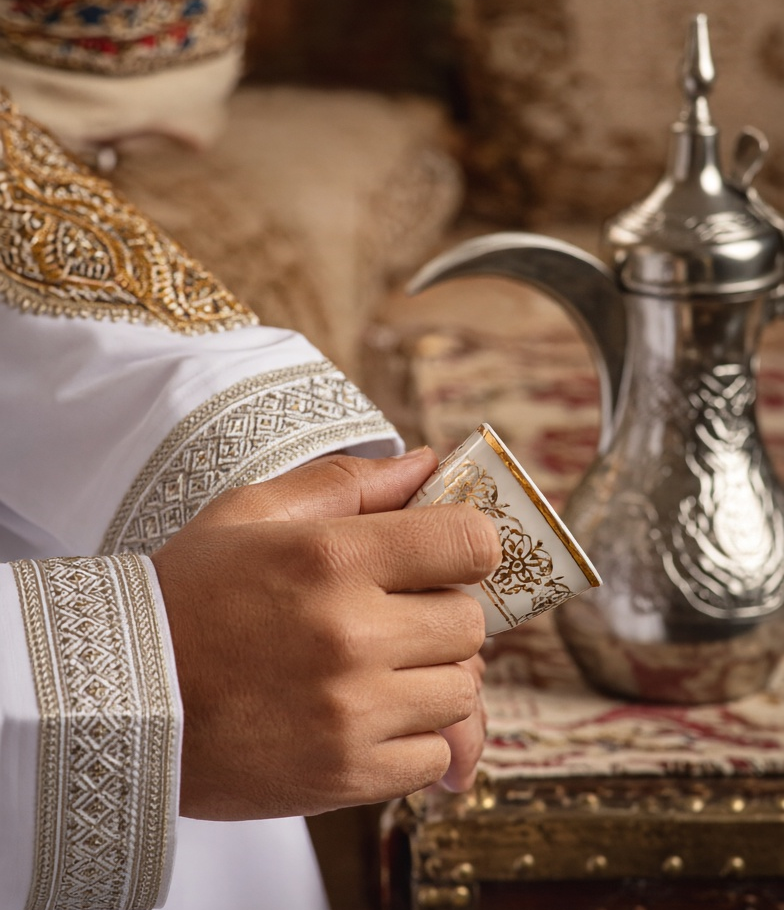
In the tradition of serving coffee, the small cups may be refilled several times. If a person no longer wishes to receive more coffee, they can gently shake the cup to convey their intention to the host; this custom is also explained in official Omani tourism sources. Of course, if a person cannot consume something due to diet, allergy, or any other reason, they can express it respectfully. The main goal is to maintain mutual respect between host and guest.
To learn more about Omani foods and hospitality customs, read the article “Omani Foods; From Nizwa Shuwa to Matrah Coffee” on Royal.
Presence in Homes and Family Gatherings
Being invited to an Omani family’s home can be a valuable experience for understanding local culture, intimacy, and the true meaning of their hospitality. When entering a home, it is better to behave politely and calmly and not enter private parts of the house without permission. In some families, the reception areas for women and men may be separate; therefore, it is better to respect the arrangements set by the host. In such situations, attention to dress is also important. Clothing that is suitable for a tourist or coastal environment is not necessarily appropriate for being in a family home or a formal gathering.
It is also better not to take photographs of the interior of the house, people, or personal belongings without permission. One of my Omani friends explained this as follows: “Our home is our privacy. Taking photos without permission is like entering without knocking.”
Dress in Oman; From the Market to the Mosque
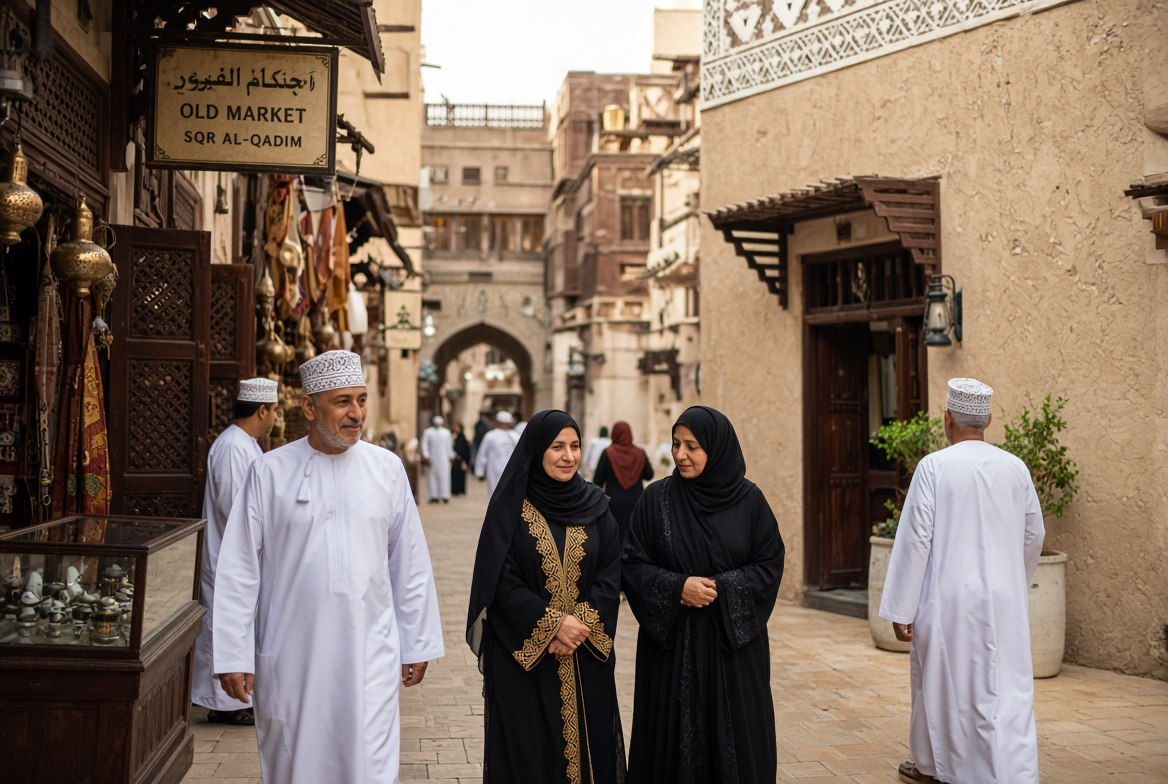
Dress is one of the most important topics in observing Omani social etiquette. Official Omani tourism sources emphasize modest and respectful clothing, and for presence in religious places, observing conservative dress is of greater importance. In general, choosing modest clothing that is appropriate to the environment is a suitable choice for being in the city, public centers, markets, historical sites, and formal settings.
Differences in Situations
On private beaches and hotel pools the dress codes may differ, but on public beaches and in family environments observing local customs is also important. Official Omani tourism sources likewise distinguish between pools and private beaches on the one hand and public environments on the other. Dress in Oman is not merely a matter of appearance; it is considered part of respect for the social and cultural environment.
Etiquette for Visiting Mosques and Religious Sites
Mosques and religious sites are among the most respected social spaces in Oman. Before entering a mosque the rules of that particular place must be observed. Dress should be appropriate, and if required, shoes should be removed at the designated area. For women, observing the rules regarding head covering when entering a mosque is important. The official Omani tourism website also emphasizes covering the head when entering mosques.
Inside the mosque one should refrain from speaking loudly, taking photographs without permission, or any behavior that disturbs worshippers. It is also better to obtain the necessary permission before photographing religious ceremonies or the people present in them.
Practical note: Sultan Qaboos Grand Mosque in Muscat is one of the few mosques open to non-Muslim visitors. Visitors must wear full covering and come during the specified hours.
Photography and Protecting Privacy
Photographing landscapes, architecture and tourist attractions in Oman is a natural part of travel in many situations; however, photographing people is a different matter. The Omani Ministry of Foreign Affairs specifically recommends obtaining permission before photographing people. In addition, some government buildings or military installations may be subject to photography restrictions. Therefore it is better to observe this simple principle:
Do not photograph people without permission and make sure photography is allowed in sensitive locations.
This issue is also important with regard to posting images on social media. Publishing photos of people or their private spaces without consent can be ethically problematic and in some cases legally so.
Behavior in Public Places
Calmness and respect for public order are important principles of social presence in Oman. Very loud behavior, disturbing others or inappropriate gestures in public spaces are not compatible with the country’s social norms. The Omani Ministry of Foreign Affairs has also emphasized avoiding loud behavior or inappropriate gestures. In shopping centers, markets, restaurants, hotels, residential neighborhoods and historical sites it is better to pay attention to the comfort of others. This matter is of greater importance in residential areas. The official Omani tourism guide also asks visitors to refrain from making loud noise or turning up music when passing through residential areas.
Respect for Family Privacy
In Omani culture, as in many societies, the family and private space hold great importance. When present in residential neighborhoods or traditional villages, one should not enter the privacy of homes merely because of the attractiveness of the architecture or local lifestyle. If a house, farm or compound is private, one must refrain from entering without permission. Even if a village or neighborhood is recognized as a tourist destination, the life of the local people continues. The tourist should distinguish between a “tourist attraction” and a “place where people live”. The official Omani tourism guide also emphasizes respect for private property and local resources when visiting villages. To learn more about Oman’s traditional villages, read the article “Tourism in Oman” on Royal.
Behavior in Villages and Traditional Areas
Visiting Oman’s traditional villages can be one of the best ways to become acquainted with the country’s historical architecture and lifestyle. However, such a visit requires observing additional considerations. One should not enter houses, gardens or agricultural land without permission. Likewise, one should not pick agricultural produce or fruit belonging to local people. Traditional water-supply and irrigation systems such as the “falaj” are also part of the local heritage and life and should not be polluted or damaged. Oman’s aflaj are listed on the UNESCO World Heritage list and responsible visitation of them is of special importance. The official guide to tourist activities in Oman emphasizes the same point. Responsible visitation means that a person enjoys the environment but leaves no negative impact on the lives of the residents.
Conversation and Personal Topics
In a first meeting, it is better to begin the conversation with general topics. Oman’s history, cities, culture, food, trade, travel, nature and the experience of life in the country can be suitable topics to start a conversation. In contrast, direct questions about income, family matters, personal relationships or highly private topics may not be appropriate in a first acquaintance. This matter is especially important in professional relationships. It is better for a working relationship to be built first on mutual acquaintance and respect, and then, if trust develops, greater closeness can follow.
Suitable topics to start with:
- Oman’s history and culture
- Omani foods
- Travel and nature in Oman
- Trade and economy
- Family (in general)
Topics that are better avoided:
- Income and personal financial matters
- Personal and family relationships
- Politics
- Religion (in a first meeting)
Gift-Giving in Oman
Gift-giving can be a sign of respect and appreciation in social relationships and gatherings. If you have been invited to someone’s home, a simple and appropriate gift can be a suitable choice. The gift does not necessarily have to be expensive; attention and suitability to the occasion matter more.
Important points in gift-giving:
- Avoid giving **alcohol or non-halal products.
- Gifts for children** are always welcome.
- Sweets, dates or cultural products are safe and suitable options.
- Appropriate packaging is important.
In work environments, however, a distinction should be made between a social gift and a gift that may be linked to commercial interests or professional decision-making. In business relationships, observing the organization’s regulations and rules on conflicts of interest is important.
Table Manners
Food in Omani culture is not merely a daily necessity and plays a role in many social occasions. In traditional gatherings, food may be served communally. In such situations it is better to follow the manner determined by the host. In Arab and Omani food traditions, **using the right hand** when eating certain foods is important, and in situations where shared food is served, observing hygiene and the host’s etiquette is essential. If a person does not eat a particular food, it is better to state the matter respectfully before attending a gathering or during the hospitality.
Ramadan and Its Etiquette; Oman’s Most Important Religious Period

Ramadan is one of the most important religious and social periods in Oman. During this month, the daily schedule changes for those who are fasting, and the social atmosphere is shaped accordingly. According to the official guide of the Omani Ministry of Foreign Affairs, eating, drinking and smoking in public during daylight hours in Ramadan is prohibited, and this applies to both Muslims and non-Muslims. Therefore, people who are present in Oman during this period must observe the official regulations and guidelines. At the same time, Ramadan is not only a period of restrictions; it is also a time for family gatherings, iftar, worship and social activities. To better understand Omani society, observing the social atmosphere after iftar and the change in the rhythm of life during this month is also a cultural experience.
Relations Between Women and Men
In interactions between women and men, attention to the circumstances and the choice of the other person is important. One should not assume that all people in a given situation behave in exactly the same way. Some people may accept a handshake while others prefer to refrain from it. In such circumstances, the best approach is paying attention to the other person’s behavior and respecting their personal boundaries**. In work environments as well, professional interaction should be based on responsibility, expertise and mutual respect.
Business Meeting Etiquette; From Building Trust to Contracts
Social culture in Oman also has reflections in the business environment. In a business meeting, neat appearance, appropriate dress, correct introduction, clear presentation of information and respectful behavior are important. It is better to allow a short opportunity for acquaintance and preliminary conversation before moving directly to financial or contractual matters; especially in a first meeting.
Key point: Offering water
A friend from Oman once told me: If an Omani offers you water to drink during a business meeting, it may be a sign that trust is beginning to develop and that they may have a positive view toward starting a business relationship with you. Water holds a special place of respect in Omani culture. These small details are important non-verbal signals that carry meaning in Omani culture. At the same time, friendly relations should not replace the formal framework of cooperation. Every important commercial agreement should be set out clearly and officially, with responsibilities, obligations and terms of cooperation specified.

Punctuality and Coordination
In professional activities, it is better for meetings and appointments to be coordinated in advance and for any possible changes to be communicated in good time. For meetings with people, especially in work or government environments, it is better not to arrive without prior coordination. It is also necessary to distinguish between the meeting time” and the “time needed for coordination, travel or entering the building. This matter is especially important in international work environments, because precise planning can prevent unnecessary misunderstandings.
Practical tip: In Oman, meeting government officials or senior managers usually requires several days to several weeks of coordination. Early planning is important.
Body Language and Non-Verbal Behavior
An important part of social communication takes place without words.
A calm tone, attention while speaking, maintaining appropriate distance and refraining from insulting or overly familiar gestures can help create better communication.
In public environments as well, it is better to avoid gestures that may be considered inappropriate in the local culture.
General principle: When in doubt, choose respectful and conservative behavior.
Use of Mobile Phones and Social Media
Technology is an inseparable part of today’s life; however, the use of mobile phones should also be coordinated with the environment.
In business meetings, religious ceremonies, family gatherings or formal conversations, continuous use of the phone may be regarded as a sign of inattention.
Likewise, posting photos or videos of others on social media without permission, especially when the image relates to a private space, is not appropriate.
Before posting an image or video it is better to ask this simple question:
Do the people in the image agree to its being posted?
Driving and Presence on the Roads
Social etiquette is not limited only to conversation and gatherings.
On the roads and in natural areas as well, observing regulations and respecting the environment is important. When visiting mountainous, desert or village areas, one should use designated routes and park the vehicle in a suitable place.
The official Omani tourism guide also recommends respecting the environment, designated paths and local facilities in natural and tourist areas.
In desert trips and activities outside the city, the use of a specialized guide and appropriate equipment is also important.
Respect for the Environment
Respect for the environment is part of responsible behavior in Oman.
Not littering, not damaging vegetation, not disturbing animals and observing the restrictions of protected areas are important principles of responsible tourism.
For example, in natural and protected areas there may be specific regulations about keeping distance from animals, use of light or photography. In such cases the instructions of that particular area must be followed.
Common Mistakes That Are Better Avoided
To have appropriate interaction with Omani society, observing a few simple principles can be very helpful:
In social communication:
• ❌ Photographing people without permission
• ❌ Entering the privacy of homes and properties without permission
• ❌ Asking about personal matters in a first meeting
• ❌ Inappropriate or insulting jokes
• ❌ Continuous use of the phone in meetings
In dress and religious places:
• ❌ Inappropriate dress in mosques and religious places
• ❌ Entering a mosque without observing the regulations
• ❌ Photographing religious ceremonies without permission
In public environments:
• ❌ Making excessive noise
• ❌ Aggressive or rude behavior
• ❌ Not observing Ramadan regulations
• ❌ Photographing government and military buildings
In the natural environment:
• ❌ Littering
• ❌ Damaging the environment and local properties
• ❌ Entering protected areas without a permit
In business relations:
• ❌ Going directly into financial matters without preliminary acquaintance
• ❌ Confusing personal closeness with professional commitment
• ❌ Not formally documenting important agreements
Summary
Omani customs and etiquette form a set of social, cultural and religious behaviors that are present in people’s daily lives. Respect, hospitality, appropriate dress, protection of privacy, observance of religious places, attention to photography regulations, calm behavior in public environments and observance of the special conditions of Ramadan are among the most important points that should be taken into account when being present in Oman. Ultimately, the best way for successful interaction with Omani society is not an attempt to change one’s personal identity, but rather **knowing the host culture and behaving respectfully while preserving one’s individual identity**. The greater a person’s knowledge of Omani society, the more conscious and effective their communication with people, the work environment and the social space can be.