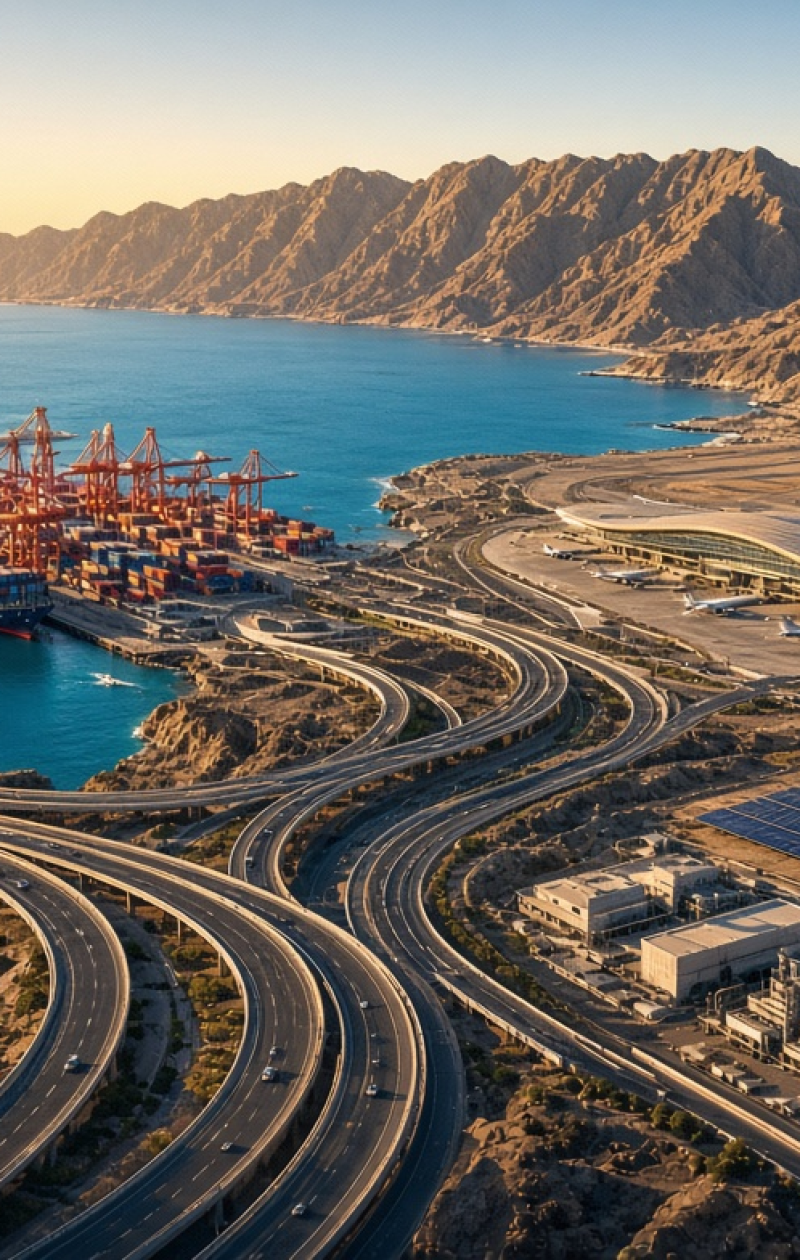
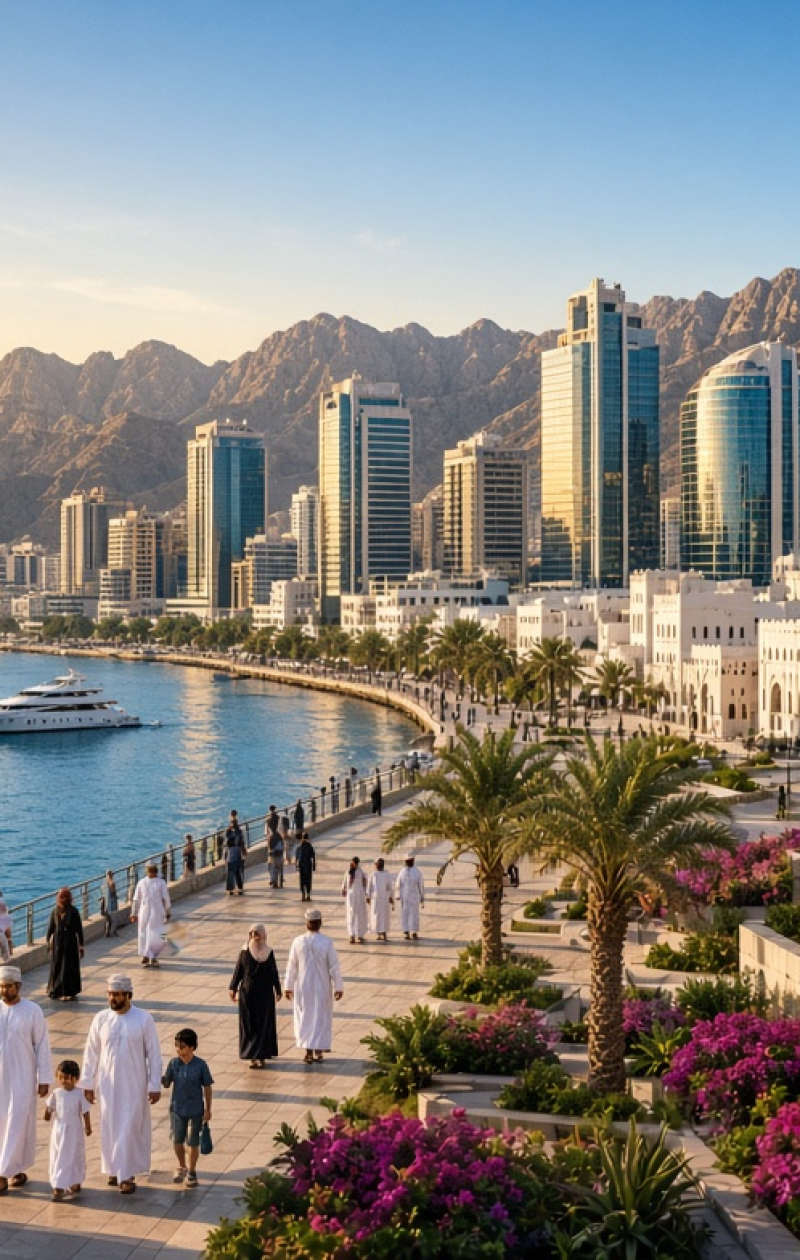
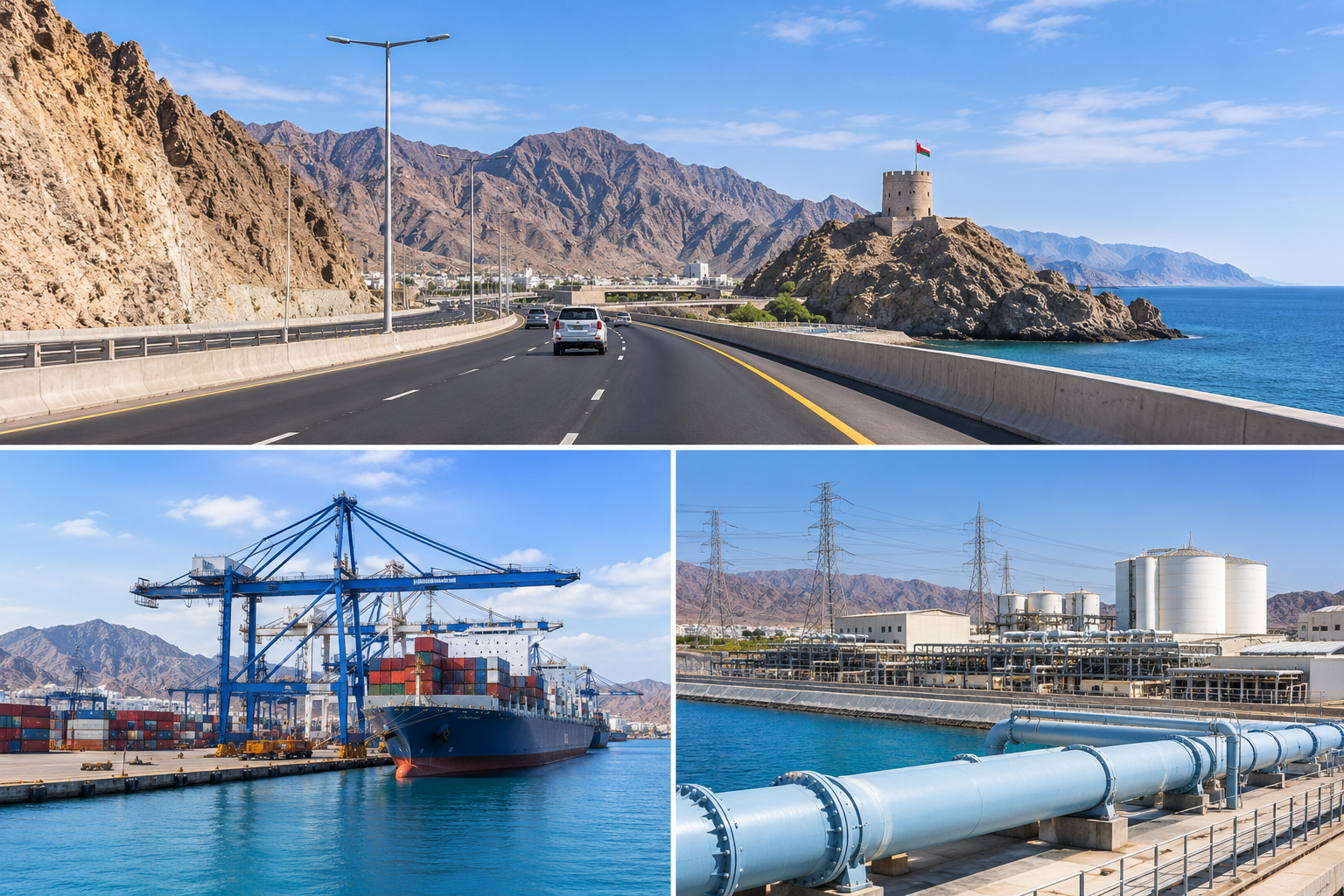
Omani infrastructure determines where a factory can be built, how much it costs to deliver a shipment, and in which city a family or company can settle more comfortably. Roads, ports, airports, electricity, water, internet, and industrial zones each form a link in a chain, and weakness in any link can raise the overall project cost. Within the framework of “Vision 2040,” Oman has identified infrastructure development as one of the tools for economic diversification and attracting the private sector. In this article, as part of the “Transport in Oman” series, we review the main components of this infrastructure and how to assess them for residence or investment.
Main Infrastructure of Oman at a Glance
• Transport: Roads, ports, airports, and the railway project under construction.
• Energy: Power generation and transmission, fuel, and solar and green hydrogen projects.
• Water: Desalination plants, distribution networks, sewage, and treatment.
• Communications: Internet, mobile phones, fiber optics, and digital services.
• Industrial: Industrial cities, free zones, and special economic zones.
• Urban and social: Housing, intra-city roads, waste, healthcare, and education.
The quality and capacity of these sectors are not the same across the country. Muscat and major cities have broader access, while areas far from the coast or the center require more precise planning for energy, water, and manpower.
Transport Infrastructure: Roads, Ports, Airports and Rail
Road Network
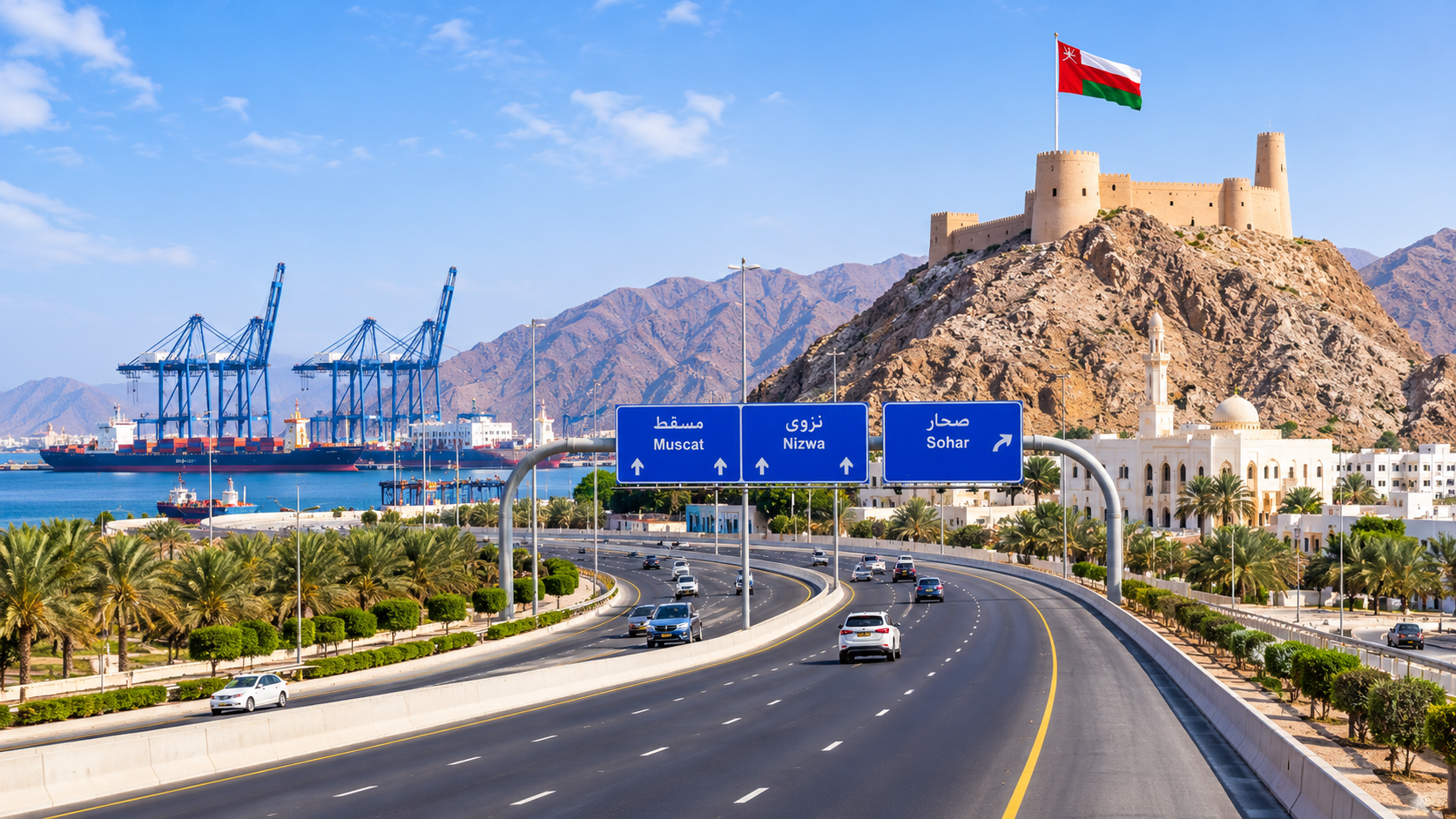
Roads are the backbone of goods and passenger movement in Oman. Main highways connect Muscat to Sohar, the interior regions, the eastern coast, and ultimately Salalah. For industrial and mining projects, distance alone is not enough; road load capacity, the possibility of heavy vehicle traffic, the condition of bridges, and the behavior of the route in rainy conditions must also be assessed.
Ports
The three deep-water ports of Sohar, Salalah, and Duqm are the country’s most important maritime gateways. Sohar is on the Sea of Oman, while Salalah and Duqm are on the Arabian Sea coast. According to the Ministry of Transport, Communications and Information Technology, total cargo handled by Omani ports in 2024 reached 137 million tons. Details of each port can be found in the “Ports of Oman” guide.
Airports
Muscat Airport is the main hub for international flights, while the airports of Salalah, Sohar, and Duqm provide air access to their regions. On 5 October 2026, a 35-year concession agreement for the operation and development of Muscat, Salalah, and Sohar airports was signed between the Civil Aviation Authority and Oman Airports. More information is available on the “Airports of Oman” page.
Hafit Railway
The Hafit Railway project is planned to connect Sohar Port via Buraimi and Al Ain to the UAE rail network. The route is 238 km long with an estimated cost of about USD 2.5 billion. Hafit Rail reported about 40% construction progress in April 2026, and a royal decree approving the bilateral rail agreement was issued in September 2026. The line is not yet operational, so it should not be relied upon for short-term planning.
Energy Infrastructure: Electricity, Fuel and Clean Energy
Every factory, data center, or desalination plant needs reliable electricity. The mere presence of a network in an area is not enough; the available capacity, voltage level, distance to the connection point, and the cost and time of network expansion must be inquired from the responsible company. Oman’s abundant sunshine has created the basis for solar projects, and green hydrogen also has a place in the country’s economic plans. Areas such as Duqm are the site of several announced projects in this field. However, the announcement of a project does not mean capacity is ready for everyone or that profitability is guaranteed, and each investment must separately assess permits, grid connection, water access, and sales markets.
Water and Wastewater Infrastructure
Oman has a dry climate, and a significant portion of drinking water in coastal areas is supplied by desalination plants. The produced water must reach the consumer through the transmission network, so the capacity and reliability of this network are decisive for high-consumption projects such as food industries, mineral processing, and large construction. In the feasibility study, note the consumption volume, required quality, connection cost, and solutions for reducing consumption. Also check whether the project’s wastewater and effluent are accepted into the public network or whether a dedicated treatment system must be built. Reusing treated water in permitted applications can reduce pressure on resources.
Communications and Digital Services
Reliable internet is essential for order management, communication with foreign partners, and administrative affairs. Coverage and connection quality are not the same in cities, industrial zones, and remote areas. A commercial office may be satisfied with a standard connection, but a data center, surveillance cameras, and industrial systems need high-speed and backup connectivity. Many administrative and investment processes today are carried out through electronic portals, but digitalization does not mean eliminating document review or permit issuance. Prepare complete documents in accordance with the requirements of each authority.
Industrial and Economic Zones
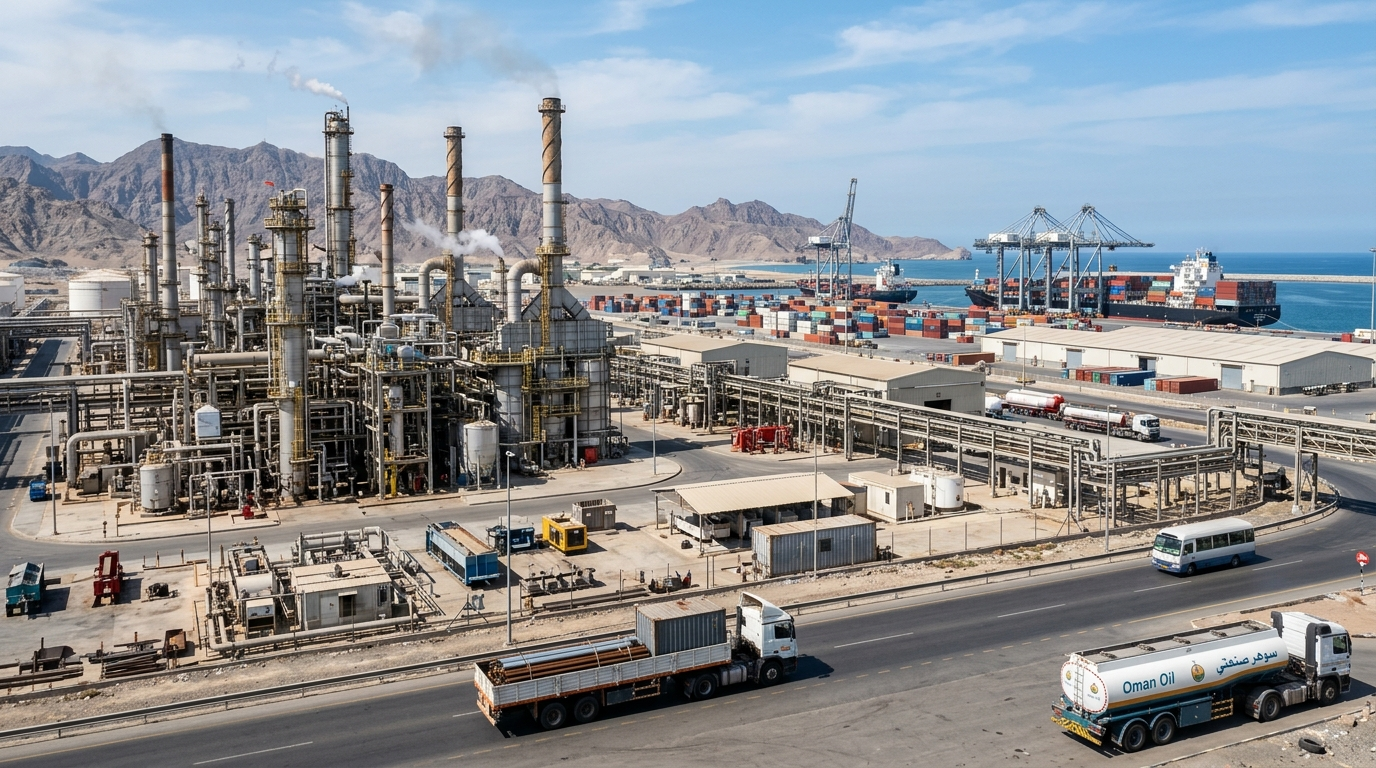
Industrial cities and special zones make business setup easier by providing land, basic services, and connection to the transport network. Conditions and incentives differ for each zone and should be inquired from the management of that specific zone.
| Zone | Location | Main Focus | Note |
|---|---|---|---|
| Sohar | North, Sea of Oman | Industry, trade and port | Close to UAE border |
| Salalah | South, Arabian Sea | Container port and free zone | Suitable for southern market and transit |
| Duqm | Central coast | Industries, energy and large projects | Special economic zone |
| Khazaen | Near Muscat | Warehousing, industry and logistics services | Close to domestic market |
This table is a general introduction. Always inquire about land allocation status, permitted activities, and costs from the official authority of that zone. Duqm is a clear example of integrated development; the port, airport, road, and industries are being developed together. Sohar is important for northern industry and trade due to the link between its port and free zone, while Salalah builds the southern network with its own port and free zone.
Urban Infrastructure and Quality of Life
For someone planning to reside, urban infrastructure means housing, schools, healthcare, shopping, and commuting. Muscat hosts the most administrative and specialized services, but other cities also have their own facilities depending on size and economic activity. Short distance on the map does not necessarily mean a short commute; peak-hour traffic and road conditions must also be considered. In coastal construction projects and new areas, surface water management and drainage are important, because sudden rainfall in Oman can lead to flooding in wadis and downstream roads.
Infrastructure for Mining and Heavy Industry
The cost of extracting and transporting mineral products depends on roads, electricity, water, and the distance to the processing site or export port. Before starting operations, road access, power capacity, water supply, workshops, and equipment storage space must be checked. Transporting heavy machinery also requires permits, approved routes, and assessment of weight and dimension limits. In evaluating a mining investment, knowing the reserve alone is not enough; infrastructure, permits, and market access must also be included in the study.
Business Opportunities in Infrastructure Development
Every major infrastructure project requires many services. Areas worth examining include:
- Engineering, project management, and technical supervision.
- Road construction and urban projects.
- Equipment and maintenance of water and power networks.
- Solar energy and clean technologies.
- Water and wastewater treatment.
- Warehousing and logistics centers.
- Specialized equipment for industries and mines.
Entering these markets requires technical competence, financial capacity, track record, and compliance with tender rules and local participation. The existence of an announced opportunity does not guarantee winning or profit.
How to Evaluate the Infrastructure of a Location?
- Specify the project’s technical needs (power, water, internet, transport) in numbers.
- Obtain the available capacity, connection cost, and implementation time from the responsible authority.
- Calculate the total cost including land, access road, energy, water, sewage, and maintenance.
- Assess the supply path for materials and product distribution to the port, airport, and customers.
- Confirm land use, permits, and environmental requirements from official authorities.
- Consider operational risks such as power outages, flooding, and access in emergency conditions.
- Obtain up-to-date and official information before any financial commitment.
Climate Risks and Sustainability in Infrastructure Projects
Intense summer heat affects electricity consumption and equipment wear, and sudden rainfall may close roads and wadis for hours. Project design must take these conditions into account from the start: backup power capacity, water storage tanks, alternative access routes, and proper drainage. Sustainability is not only about the environment; a project dependent on scarce fresh water or expensive electricity will face heavier long-term costs. For this reason, many investors optimize energy and water consumption before choosing a location.
Common Mistakes in Infrastructure Assessment
- Relying on the zone’s name or promotional incentives without verifying actual capacity.
- Calculating land cost without the cost of connection to power, water, and roads.
- Ignoring the time required for permits and network implementation.
- Assuming readiness of projects still under construction, such as new railway lines.
- Using outdated and undated information for financial decisions.
Frequently Asked Questions about Omani Infrastructure
What are the most important transport infrastructures in Oman?
The road network, the ports of Sohar, Salalah, and Duqm, the airports of Muscat, Salalah, Sohar, and Duqm, and the Hafit Railway project under construction.
Has the Hafit Railway been inaugurated?
No. According to Hafit Rail’s announcement in April 2026, about 40% of the project has been completed. Follow official announcements for the operational timeline.
Are electricity and water the same in all regions of Oman?
No. Capacity and supply cost depend on the region and type of consumption and must be inquired from the responsible authority before buying land or starting construction.
Which zones are suitable for industry and logistics?
Sohar, Salalah, Duqm, and Khazaen Economic City are common options. The final choice depends on the type of activity, target market, and permits.
Where can we get official information on Omani projects?
From Oman Vision 2040, the Ministry of Transport, the Public Authority for Special Economic Zones and Free Zones, the Civil Aviation Authority, and the official website of each zone or project.