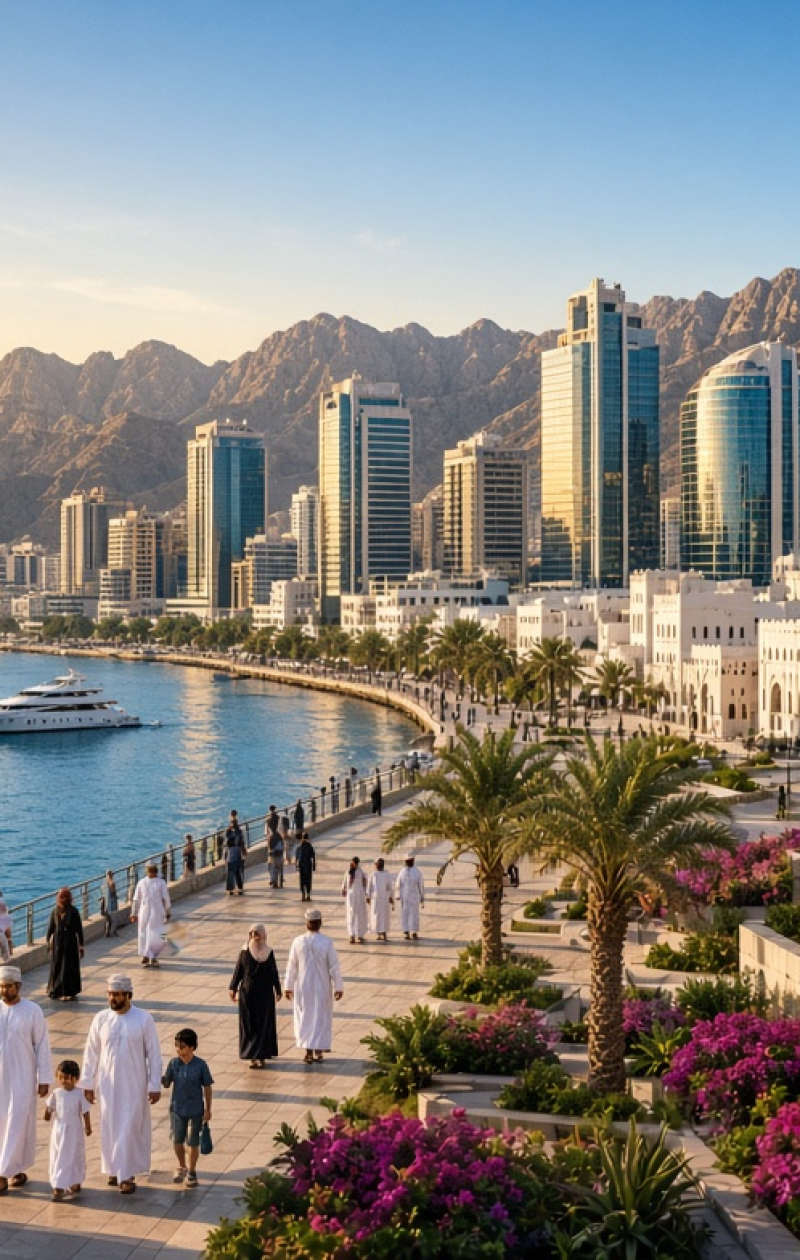
Omani culture is a living blend of Arab traditions, seafaring heritage, Islamic beliefs, and influences from neighboring civilizations in Asia and Africa. The Sultanate of Oman is located in the southeastern Arabian Peninsula, with Muscat as its capital. Despite rapid modernization in recent decades, the country has successfully preserved its cultural identity—from everyday clothing to historic forts, traditional markets, and local festivals. Whether you plan to visit Oman or simply want to learn more about its customs and traditions, this guide introduces you to the most important aspects of the country’s culture and society.
| Information | Details |
|---|---|
| Official Name | Sultanate of Oman |
| Capital | Muscat |
| Official Language | Arabic |
| Main Religion | Islam |
| Currency | Omani Rial (OMR) |
| National Day | 18 November |
Religion in Oman
Islam is the official religion of Oman and has a direct influence on laws, the calendar, and lifestyle. Oman is one of the few countries in the world where the Ibadi school has a large following; Sunni and Shia communities also live in the country. Simplicity in religion and peaceful coexistence are well-known features of Omani society. The Sultan Qaboos Grand Mosque in Muscat is one of the symbols of the country’s Islamic architecture, and visits are possible for non-Muslims during specified hours. Modest dress is required for entry.
Languages and Dialects in Oman
The official language of Oman is Arabic, and people speak the Omani dialect. In addition, local languages such as Mehri and Jibbali are spoken in the Dhofar region, while Balochi and Swahili can be heard among certain communities. This linguistic diversity reflects Oman’s historical connections with East Africa, the Indian subcontinent, and Iran. English is also widely used in cities, hotels, and tourist areas.
Traditional Clothing in Oman
Men’s Attire
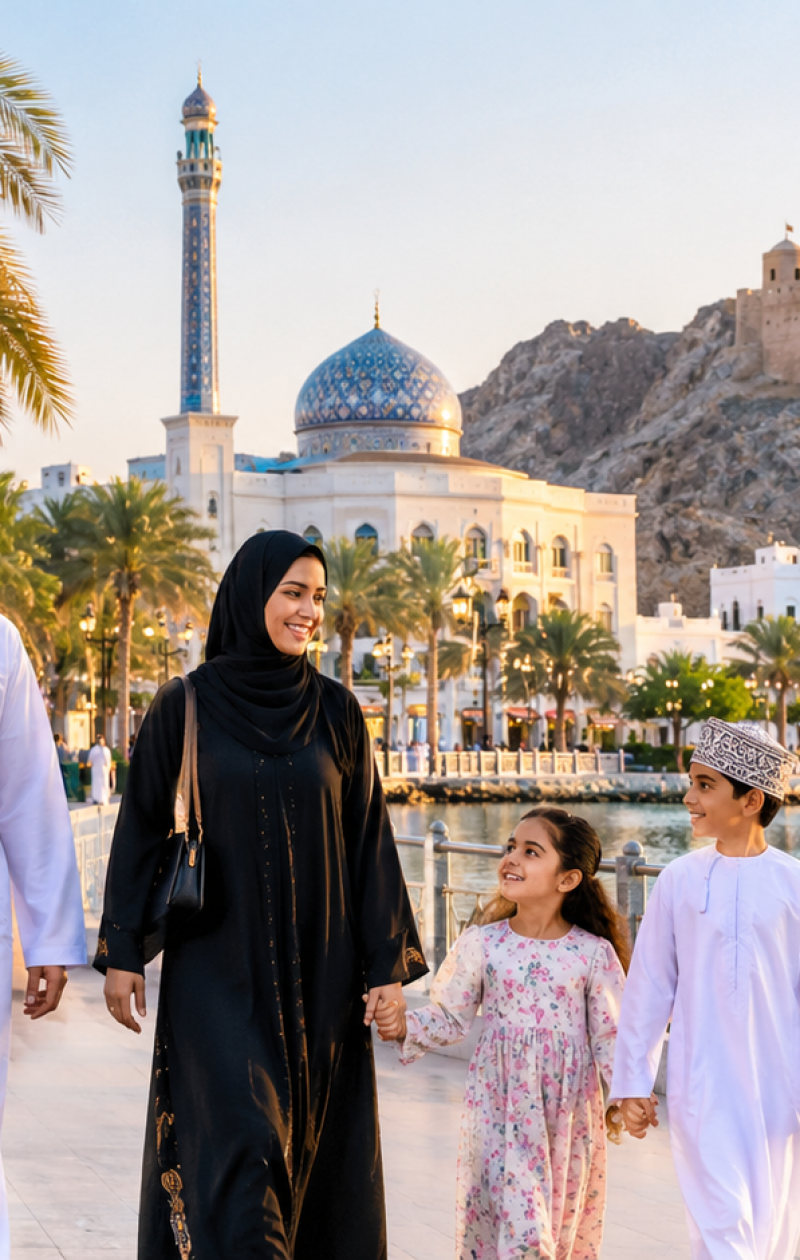
Omani men usually wear the dishdasha, a long, simple, and often white robe suited to the country’s hot climate. On their heads they wear an embroidered cap called the “kumma” or a colorful turban known as the “massar.” The traditional Omani dagger, known as the “khanjar,” is worn on the belt during formal occasions and celebrations and even appears on the national emblem.
Women’s Attire
Omani women, depending on the region, wear colorful traditional dresses with delicate embroidery, and in public they usually wear an abaya and headscarf. Traditional silver jewelry is an important part of women’s adornment at weddings and festivals.
Hospitality and Social Etiquette
Hospitality is considered the most important social value in Omani culture. Serving Arabic coffee and dates is a sign of respect for the guest. Some important points for behavior in Omani society:
• Right hand: Use your right hand when giving or receiving coffee, food, or gifts.
• Dress: Wear modest and respectful clothing in public places; both men and women should cover their shoulders and knees.
• Shoes: Remove your shoes when entering a home or mosque.
• Photography: Taking photos of people, especially women, without permission is not appropriate.
• Ramadan: During Ramadan, do not eat or drink in public during daylight hours.
Traditional Omani Foods and Drinks
Omani cuisine is influenced by Indian spices, rice, meat, and seafood. The most important traditional dishes and foods include:
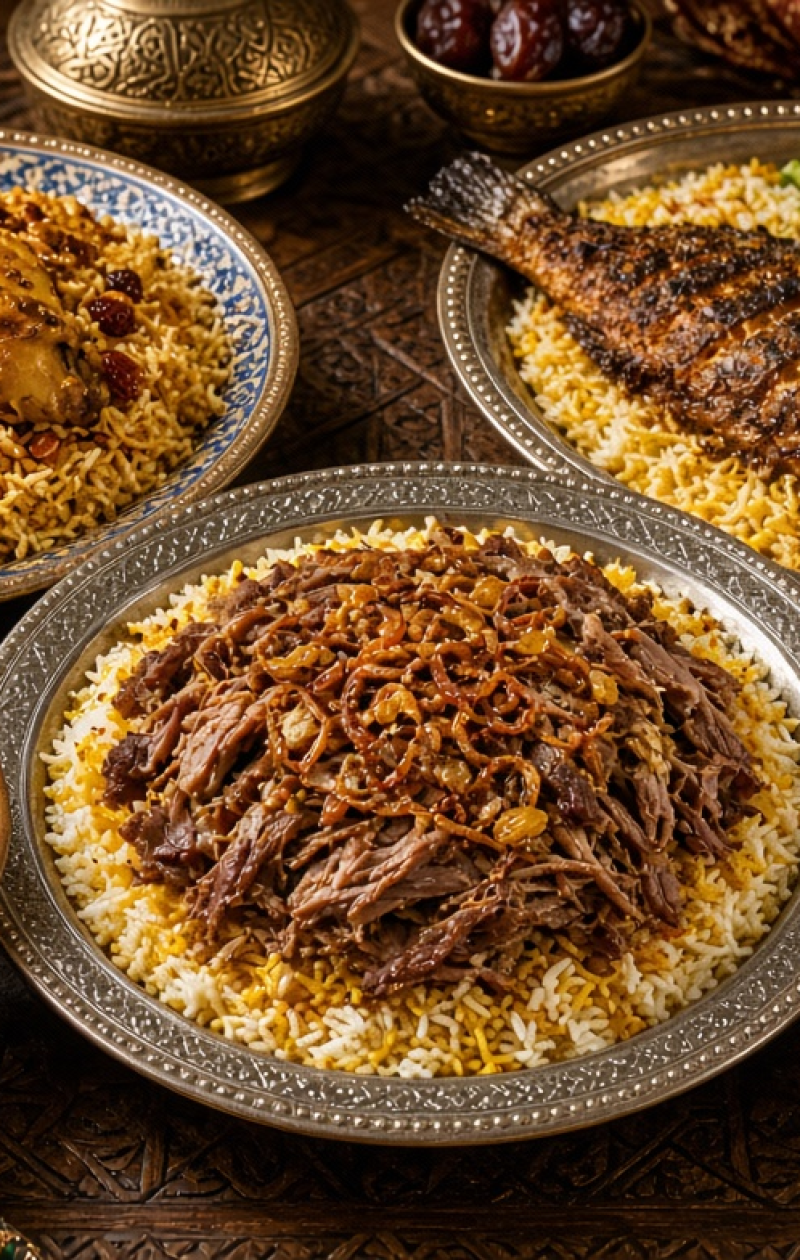
• Shuwa: Spiced meat slow-cooked for hours in an underground oven, usually served during Eid al-Fitr and Eid al-Adha.
• Majboos: Spiced rice with chicken or red meat, similar to kabsa in other Arab countries.
• Mashwi: Grilled kingfish served with rice and Omani lime.
• Harees: An ancient dish made from wheat and meat, popular during Ramadan and celebrations.
• Omani Halwa: A thick, jelly-like sweet made from starch, sugar, saffron, cardamom, and rose water, a symbol of Omani hospitality.
• Arabic Coffee (Qahwa): Cardamom-flavored coffee offered to guests along with dates.
Music, Dance and Traditional Arts of Oman
Local Omani music and dances are performed at festivals, weddings, and national occasions. The dances are often collective and accompanied by drums, flutes, and poetry. Some of the well-known art forms include:
• Razha: A martial dance and song performed with swords and sticks, popular in various regions of Oman.
• Al-Ayyala: A group performance with drums, poetry, and coordinated movements, inscribed on UNESCO’s Intangible Cultural Heritage list.
• Sea Songs: Music and chants of sailors that recall the era of Oman’s maritime trade.
Omani Handicrafts
Omani handicrafts reflect the skill of local artisans and their connection to the region’s nature and history. Mutrah Souq in Muscat, Nizwa Souq, and the markets of Salalah are among the best places to see and buy these works.
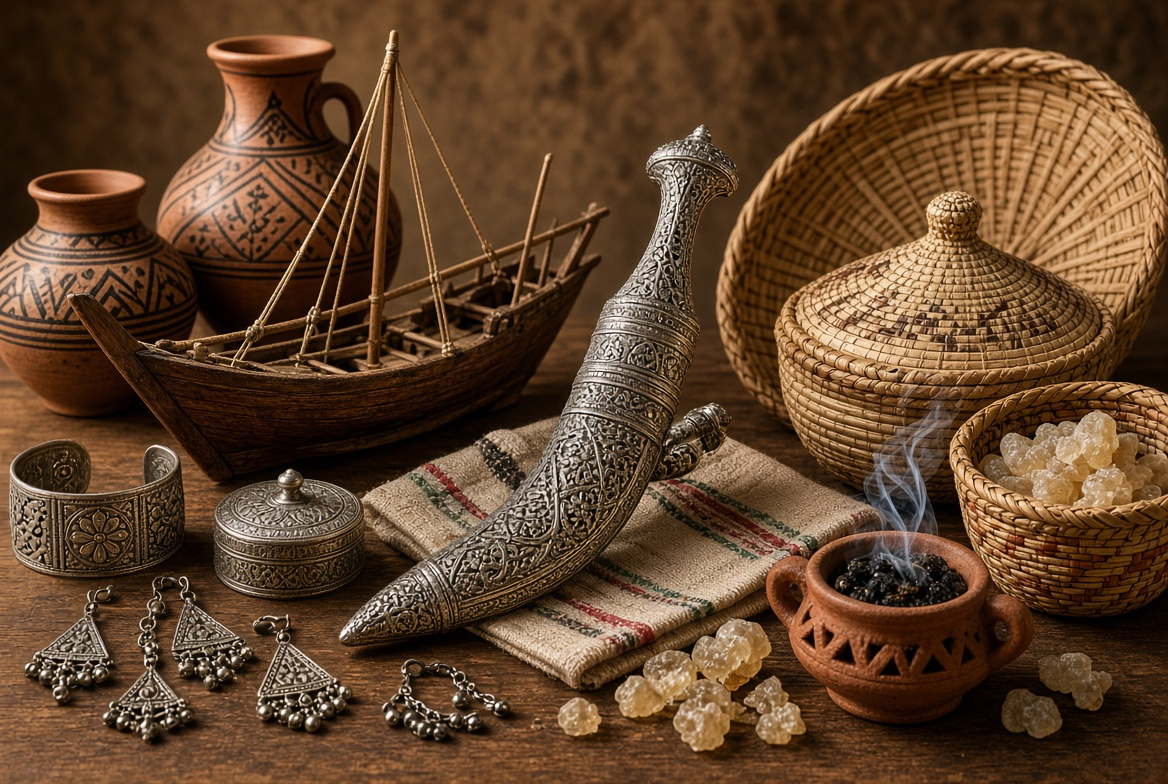
• Khanjar: Crafting silver daggers with decorated sheaths, a valuable and authentic art.
• Silverwork: Traditional silver jewelry with geometric and floral designs.
• Pottery: Pottery-making, especially in the town of Bahla and its surroundings.
• Dhow Building: Traditional wooden boats that are still built in the city of Sur.
• Palm Weaving: Weaving mats and baskets from palm leaves.
Frankincense: The Scent and History of Oman
Frankincense (luban) is one of the cultural symbols of Oman. The Dhofar region in the south of the country has been a center of production and trade of this fragrant resin for thousands of years. The “Land of Frankincense” is inscribed on the UNESCO World Heritage List, and Omanis still use frankincense in homes, gatherings, and ceremonies. The smoke of frankincense in traditional incense burners is a sign of welcome.
Historical Heritage and Architecture
Forts and watchtowers scattered across the country are distinctive symbols of Omani culture. Nizwa Fort and Bahla Fort are among the most famous, and Bahla Fort is listed as a UNESCO World Heritage Site. The traditional irrigation system known as “aflaj,” which has supplied water to villages and date palm groves for centuries, is another of Oman’s registered heritage sites.
Important Festivals and Occasions in Oman
• Eid al-Fitr and Eid al-Adha: The two major Muslim festivals celebrated with visits, special foods, and new clothes.
• Oman National Day: National celebration on 18 November with parades, fireworks, and city decorations.
• Salalah Khareef: The rainy and green season in Dhofar from around June to September, attracting many tourists to Salalah.
• Ramadan: The month of fasting whose nights are filled with gatherings and family iftars.
The Role of Women in Omani Society
In recent decades, Omani women have become actively present in education, medicine, business, and government jobs. Nevertheless, family and traditional values still play an important role in their lives. Female travelers generally feel safe in Oman, but observing local dress and customs is recommended.
Important Tips for Travelers Interested in Omani Culture
• The best time to travel is from October to April, when the weather is milder.
• Friday is the weekly holiday, and Nizwa Souq is busy and worth visiting on Friday morning for the livestock market.
• Ask local people and welcome their hospitality; refusing coffee may be considered impolite.
• Before traveling, check visa and entry regulations from official sources.
Conclusion
Omani culture is a combination of warm hospitality, deep-rooted traditions, handicrafts, and close social relations. Understanding Omani customs and traditions not only makes a trip to the country more enjoyable, but also gives us a deeper appreciation of the cultural diversity of the Middle East. If you are interested in the cultures of other countries, you can also explore other articles in the “Culture and Society” section.
Frequently Asked Questions about Omani Culture
How does Omani culture differ from other Arab countries on the Persian Gulf?
Oman has a distinctive culture due to its maritime history, geographic location, and the Ibadi school of Islam. A spirit of mediation, ethnic diversity, and connections with East Africa and India are among its notable features.
What is the formal attire of the Omani people?
Men wear the dishdasha, kumma or turban, and the khanjar on formal occasions. Women wear colorful traditional dresses or the abaya.
What is the most famous Omani dish?
Shuwa is the most famous and important festive dish in Oman. Majboos, mashwi, and harees are also very common.
Do tourists need to follow a specific dress code?
Yes, modest and covering clothing is recommended in public places. More complete coverage is required for entering mosques.
What language do people speak in Oman?
The official language is Arabic, but in some regions local languages such as Mehri, Jibbali, Balochi, and Swahili are also spoken.