Anyone who travels to Oman for the first time quickly realizes that this country is built around car travel. Cities are far apart, much of the land is covered by mountains and desert, and many attractions lie away from densely populated centers. For this reason, roads are the main pillar of movement, while other methods mostly play a complementary role. This does not mean it is impossible to get around Oman without a car. Government buses, phone taxis, online services, and domestic flights each cover part of travelers’ needs. In this guide we review each of these options and explain which type of trip they are better suited for.
Main Transport Options in Oman
Travelers and residents usually use a combination of the following:
• Private or rental car: The most flexible way to reach scattered destinations.
• Bus: An affordable option for travel within Muscat and between major cities.
• Taxi: Suitable for short trips, unplanned hours, and transfers from the airport to the hotel.
• Airplane: Significant time saving for long distances, especially travel to the south.
• Ship and boat: Mostly for specific destinations such as remote coastal areas.
• Trucks and freight fleet: Connecting ports, industrial zones, and markets to one another.
The choice among these options does not depend only on cost. The number of companions, amount of luggage, travel season, and how familiar you are with the route also influence the final decision.
Road Transport in Oman
Road Network and Route Quality
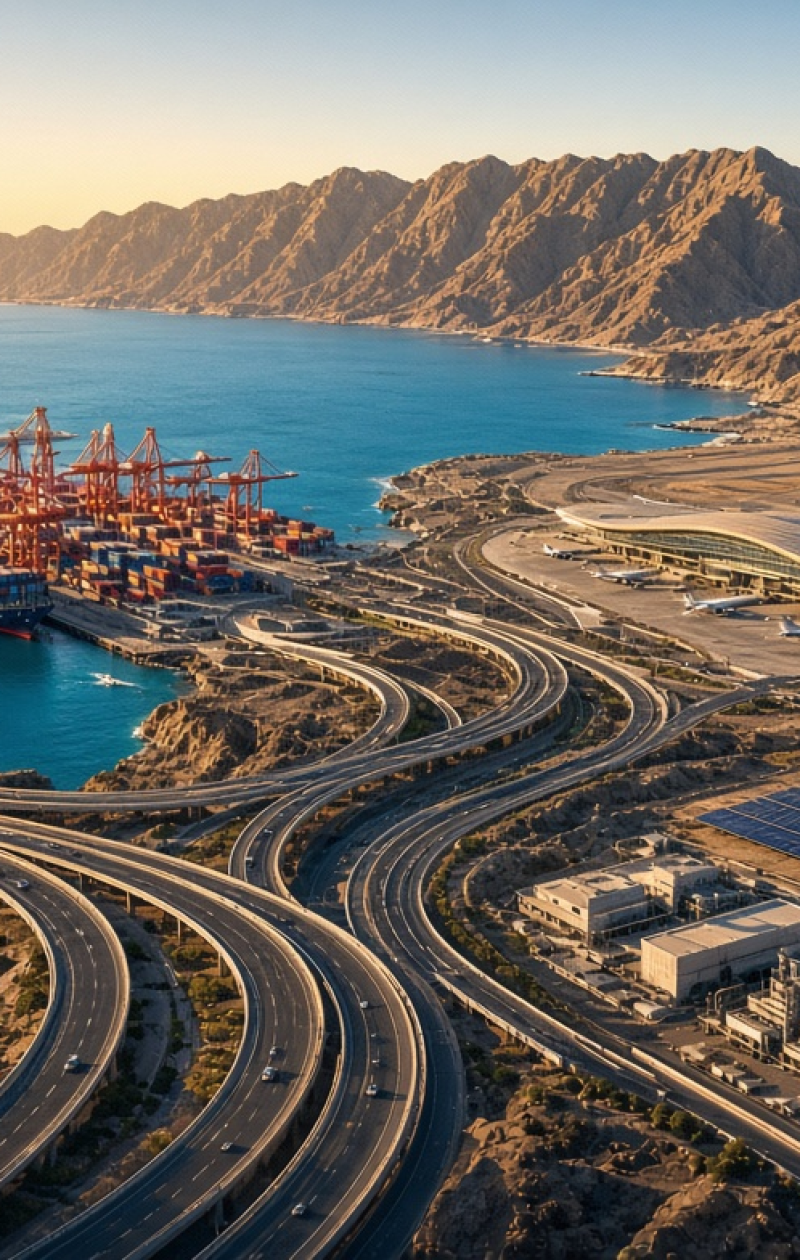
The country’s main axes are paved and in most cases well maintained. Highways connecting Muscat to the north, the interior regions, and the eastern coast are smooth and comfortable for driving. In contrast, secondary rural roads and routes leading to valleys and beaches far from cities may be narrow, sandy, or steep and require a more suitable vehicle. A point travelers often underestimate is the distance between services. On main routes petrol stations and restaurants are plentiful, but in some central parts of the country you may drive hundreds of kilometres without a fuel station. Fill the tank before setting off and carry extra water and food.
Traffic and Timing
Traffic is mainly heavy in Muscat during morning and evening rush hours. Allow enough time buffer for reaching the airport, business meetings, or flights. During peak seasons and official holidays, routes leading to tourist destinations are also busier than usual.
Buses and Public Transport
City Buses in Muscat
The most important bus operator in the country is the National Transport Company of Oman, operating under the brand name “Mwasalat.” Several city lines operate in Muscat, connecting areas such as Ruwi, Athaiba, shopping centers, hospitals, and parts of industrial zones. If your accommodation and destination lie along one of these lines, the bus can significantly reduce travel costs. However, Muscat’s bus network is not comparable to the metro and urban rail systems of major world cities. The interval between buses may be long, and sometimes you need to walk a bit or change lines to reach the final destination. Before relying on the bus, check the route map and departure times on the company’s official website or app.
Intercity Buses
In addition to city services, Mwasalat takes passengers from Muscat to cities such as Sur, Buraimi, Duqm, and Salalah, and also has lines to Dubai. For those without a car or who do not want to spend hours behind the wheel, these services offer significant savings. Intercity bus routes and departure times sometimes change, so plan your trip based on information with an up-to-date date. Remember that the bus terminal is not always in the city center; also calculate the cost and time of reaching the hotel or workplace from the terminal.
Taxis and Online Services
Taxis in Oman cover a wide range. Traditional orange and white taxis are still seen in many cities, and alongside them companies such as Marhaba and Mwasalat offer licensed taxis with meters. Online services such as Otaxi, Tasleem, and some other apps are also available in Muscat. If you take a traditional taxi without a meter, agree on the price before starting. Even with official and app-based taxis, it is better to ask in advance how the fare is calculated and whether cash or card payment is accepted. In smaller cities the apps may not have adequate coverage. In such cases your hotel or host can arrange a reliable taxi. For long intercity routes it is also better to clearly agree on the price and route with the driver before departure.
Specific Weather and Environmental Hazards
Flash floods in the wadis are among the most serious hazards in Oman. Even if the sky above you is clear, rainfall in the upstream highlands can bring water to your path within minutes. Never enter a flooded path and heed official warnings. In summer, extreme heat puts heavy pressure on tires and the engine. Dust and sandstorms also reduce visibility. In areas such as Dhofar and the interior regions, camels or livestock may enter the road, especially at night, so reduce speed on these routes.
Car Rental
Car rental companies operate at airports and in major cities. Before signing the contract, ask about the type of insurance, deposit amount, mileage limit, fuel policy, and liability for damage. If you plan to travel to mountainous or sandy areas, make sure the contract allows use of those routes and that the vehicle is suitable for them. Crossing the border with the UAE usually also requires a separate permit. Foreign travelers should check whether their national driving licence is accepted alone or whether an international driving permit is also required. This depends on nationality and type of residence, so inquire from the rental company and official sources before travelling.
Travel Between Cities in Oman
Muscat, the North and Interior Regions
Muscat is the capital and the centre of most administrative and commercial activities. From there, suitable roads lead to Sohar and Buraimi in the northwest, Nizwa and Bahla in the interior, and Sur on the eastern coast. These routes are usually doable as day trips, but if you plan to visit several points, overnight stays along the way make the journey more comfortable.
Travel to Salalah and the South
Salalah is the centre of Dhofar Governorate and is about one thousand kilometres from Muscat. Driving this route takes many hours and large parts of it pass through the desert. If you have time and enjoy stopping along the way, overland travel offers a different experience; however, for most travellers a domestic flight is more practical. During the Khareef season, from around June to September, Dhofar becomes green and attracts large numbers of people. In these months flights and accommodation sell out earlier, so early booking is important.
Mountainous and Natural Areas
Attractions such as valleys, mountain villages, and remote beaches often have rough routes. On some mountain roads passage may be permitted only for four-wheel-drive vehicles. Before setting off, check the route and weather conditions, carry enough water and battery charge, and inform an acquaintance of your travel plan.
Flights and Sea Travel
Domestic airlines operate flights between Muscat and destinations such as Salalah, Duqm, and Khasab. Flight time is far shorter than driving and is more suitable for travellers short on time. Sea travel is also an attractive option in certain periods for reaching areas such as Musandam or the islands, but its schedule is seasonal and should be reconfirmed before travel. In both cases, inquire about ticket conditions, baggage rules, and required documents from the service provider. Details of airports and ports can be read on the dedicated pages of this site.
Tips for Tourists and Residents
Before travelling, check the following:
• The actual distance of the hotel to attractions and terminals, not just the map distance.
• Availability of buses or taxis at origin and destination and their operating hours.
• Driving documents and insurance conditions if you rent a car.
• Road and weather conditions on intercity and mountain routes.
• Accepted payment methods in taxis and buses.
If you plan a long stay, do not assess car costs only by purchase or rental price. Fuel, insurance, servicing, repairs, and parking are also part of the real cost. Those living without a car should choose accommodation near a bus line or areas with taxis, because apparent proximity to the workplace does not always mean easy access.
Freight and Goods Transport
Road freight is the main pillar of supplying domestic markets and industries and connects ports, industrial zones, and warehouses. The choice of truck type depends on weight, dimensions, type of cargo, and delivery time. For heavy loads such as mineral materials or stone, observing weight limits and proper load securing is vital. In international trade, road transport is usually one link in a larger chain that also includes sea, air, customs, and insurance. Topics such as warehousing and clearance should be followed up in the logistics section.
The Future of Transport in Oman
Urban growth and the expansion of industrial activities increase the need for a more efficient transport network. Plans such as the development of bus services, improvement of taxi services, and rail projects have been proposed or are under implementation. However, the announcement of a plan does not mean it is ready for public use, and planning should rely on official and dated information.
Conclusion
Transport in Oman is a combination of roads, cars, buses, taxis, airplanes, and ships, with roads at its centre. A tourist visiting several cities will probably benefit more from a rental car, a budget traveller can use intercity buses, and someone staying only in Muscat usually manages with a combination of bus and taxi. The most important advice is to check the route, times, and regulations from reliable and up-to-date sources before every trip.
Frequently Asked Questions
Are there public buses in Oman?
Yes. Mwasalat operates buses both in Muscat and between cities, but coverage is not the same everywhere and it is better to check the lines in advance.
Is a car necessary for getting around in Oman?
It is not mandatory, but in most areas a car provides more convenience. If you live or stay along bus lines or near busy taxi areas, you can manage without a car.
Which side of the road is driving on in Oman?
On the right side. The steering wheel is also on the left.
What is the best way to travel between cities?
For more flexibility a private or rental car, for cost saving an intercity bus, and for very long distances such as Muscat to Salalah a domestic flight are suitable options.
What points should be noted when driving in mountainous areas and wadis?
Road and weather conditions, suitability of the vehicle, sufficient fuel, and above all the risk of flash floods. In case of rain, avoid crossing flooded paths.